
Embark on a journey to enhance your mental well-being with valuable insights on improving mental health. From understanding the importance of mental health to exploring strategies for resilience, this guide offers a comprehensive approach to nurturing a healthier mind.
Discover practical tips and expert advice to incorporate self-care practices, manage stress, and seek professional help for optimal mental wellness. Dive into the realm of healthy lifestyle habits that can positively impact your mental and emotional state.
Understanding Mental Health
Mental health refers to our emotional, psychological, and social well-being. It is crucial for our overall health and impacts how we think, feel, and act in daily life.
Several factors can affect mental health, including genetic predisposition, life experiences, and biological factors. Stress, trauma, and abuse can also have a significant impact on mental well-being.
The Difference Between Mental Health and Mental Illness
- Mental health: Refers to the overall well-being of an individual, including emotional resilience, coping mechanisms, and ability to navigate life’s challenges.
- Mental illness: Refers to specific conditions that affect a person’s thinking, feeling, behavior, or mood. These can include depression, anxiety disorders, bipolar disorder, and schizophrenia.
Promoting Mental Health
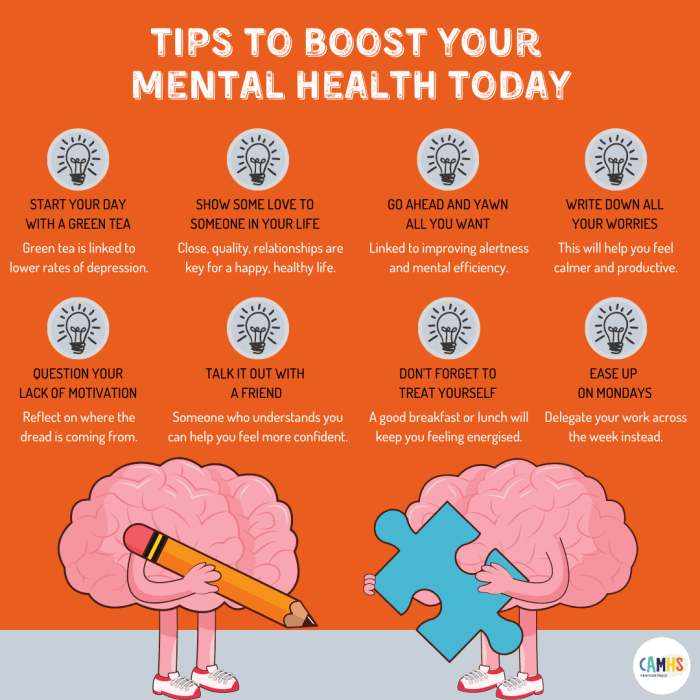
Self-care plays a crucial role in maintaining good mental health. Taking care of oneself not only improves overall well-being but also helps in managing stress, anxiety, and other mental health challenges effectively.
Importance of Self-Care
- Make time for activities you enjoy, such as hobbies, exercise, or spending time with loved ones.
- Practice mindfulness and relaxation techniques, like meditation or deep breathing exercises.
- Ensure you are getting enough sleep, eating nutritious meals, and staying hydrated.
Strategies for Reducing Stress and Anxiety
- Establish a daily routine to create a sense of structure and stability in your life.
- Avoiding overcommitting yourself and learn to say no when needed.
- Engage in physical activity, as exercise is known to reduce stress and anxiety levels.
Building Resilience and Coping with Challenges
- Develop a strong support system by connecting with friends, family, or a therapist.
- Practice positive thinking and reframing negative thoughts to build resilience.
- Seek professional help when necessary and do not hesitate to reach out for support.
Seeking Professional Help
Seeking professional help through therapy and counseling can significantly benefit individuals struggling with mental health issues. These mental health professionals are trained to provide support, guidance, and tools to help manage symptoms, improve coping skills, and work through underlying issues.
The Benefits of Therapy and Counseling
- Therapists and counselors can offer a safe and non-judgmental space to talk about your thoughts and feelings.
- They can help identify and challenge negative thought patterns and behaviors that contribute to mental health issues.
- Professional help can provide coping strategies, stress management techniques, and tools to improve overall well-being.
- Therapy and counseling can assist in building resilience and developing healthier relationships with oneself and others.
Finding a Qualified Mental Health Professional
- Start by asking for recommendations from your primary care physician, friends, or family members.
- Research online directories or platforms that list licensed therapists and counselors in your area.
- Check the credentials, experience, and specialization of the professional to ensure they are a good fit for your needs.
- Consider scheduling an initial consultation to assess the therapist’s approach and determine if you feel comfortable and understood.
Stigma Surrounding Seeking Help
- There is a common misconception that seeking help for mental health issues is a sign of weakness or failure.
- Stigma can prevent individuals from reaching out for support and accessing the help they need to improve their mental well-being.
- It is important to challenge these stigmas and recognize that seeking help is a brave and proactive step towards better mental health.
- By normalizing conversations around mental health and therapy, we can reduce the stigma and encourage more people to seek the support they deserve.
Healthy Lifestyle Habits
Maintaining a healthy lifestyle is crucial for promoting mental well-being. The connection between physical health and mental health is strong, and incorporating healthy habits into your routine can have a significant impact on your overall well-being.
Exercise and Nutrition
Regular exercise is not only beneficial for your physical health but also plays a vital role in improving your mental health. Physical activity helps release endorphins, also known as “feel-good” hormones, which can help reduce feelings of stress and anxiety. Incorporating exercise into your routine, whether it’s through daily walks, yoga, or gym sessions, can boost your mood and overall mental well-being.In addition to exercise, maintaining a balanced and nutritious diet is essential for supporting your mental health.
Foods rich in vitamins, minerals, and antioxidants can help improve brain function and regulate mood. Ensuring you consume a variety of fruits, vegetables, whole grains, lean proteins, and healthy fats can provide the necessary nutrients to support your mental well-being.
Adequate Sleep
Getting enough quality sleep is crucial for mental health. Sleep plays a vital role in regulating mood, cognitive function, and overall well-being. Lack of sleep can lead to increased stress, anxiety, and irritability, impacting your mental health negatively. Establishing a consistent sleep routine, creating a relaxing bedtime environment, and avoiding stimulants before bed can help improve the quality of your sleep and support your mental well-being.
In conclusion, prioritizing your mental health is essential for overall well-being. By implementing the strategies discussed, you can cultivate a positive mindset and navigate life’s challenges with resilience. Take the first step towards a healthier mind today and experience the transformative power of self-care and mental wellness.
General Inquiries
What are some simple daily practices to improve mental health?
Engaging in mindfulness exercises, practicing gratitude, and maintaining social connections can significantly boost mental well-being.
How can I find a reliable mental health professional?
Seek recommendations from trusted sources, such as your primary care provider or online reviews, and ensure the professional has relevant credentials and experience.
Is it normal to experience occasional mental health struggles?
Yes, facing challenges with mental health is a common experience. It’s important to reach out for support when needed and prioritize self-care.


