Embark on a journey through the complex landscape of Mental Health Stigma and Awareness, shedding light on the challenges and triumphs in this critical area of healthcare.
Delve into the intricacies of how societal perceptions shape our understanding of mental health, influencing the support available to those in need.
Mental Health Stigma
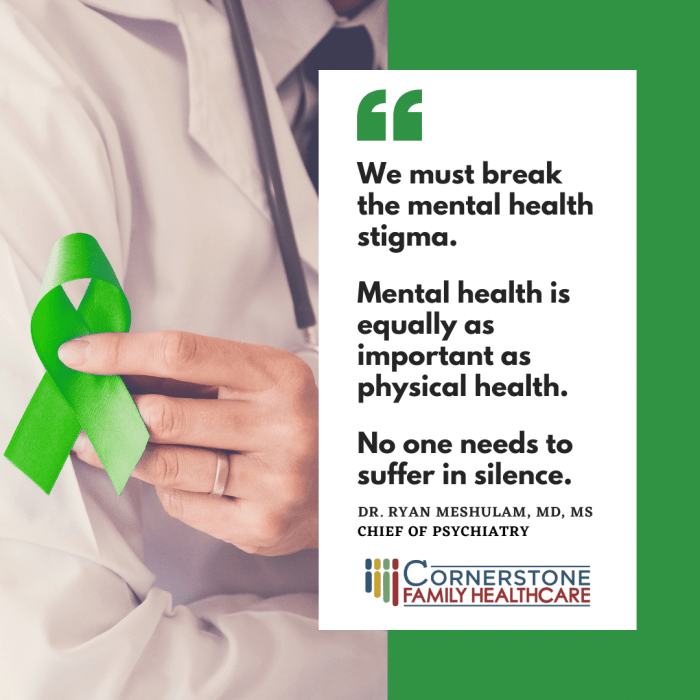
Mental health stigma refers to the negative attitudes, beliefs, and discrimination surrounding mental health conditions. It often leads to individuals feeling ashamed, judged, or isolated because of their mental health struggles.
Examples of Mental Health Stigma in Society
- Labeling individuals with mental health conditions as “crazy” or “weak.”
- Assuming that people with mental illnesses are violent or dangerous.
- Dismissing mental health concerns as a sign of personal failure or lack of willpower.
Impact of Mental Health Stigma on Individuals Seeking Help
Mental health stigma can prevent individuals from seeking help or disclosing their struggles due to fear of judgment or discrimination. This can lead to delayed treatment, worsening of symptoms, and increased feelings of isolation and hopelessness.
Common Misconceptions Contributing to Mental Health Stigma
- Belief that mental health conditions are a result of personal weakness or character flaws.
- Associating mental health conditions with violence or unpredictability.
- Viewing seeking help for mental health as a sign of weakness rather than strength.
Awareness Campaigns
Creating awareness about mental health is crucial in breaking down stigma and encouraging individuals to seek help and support. By increasing awareness, we can promote understanding, empathy, and acceptance for those struggling with mental health issues.
Successful Mental Health Awareness Campaigns
Several successful mental health awareness campaigns have made significant impacts in educating the public and reducing stigma. One notable example is the “Bell Let’s Talk” campaign in Canada, which aims to start conversations about mental health and raise funds for mental health initiatives. Another successful campaign is “Time to Change” in the UK, which challenges stereotypes and encourages open discussions about mental health.
Different Strategies in Raising Mental Health Awareness
- Utilizing social media platforms to reach a wider audience and share personal stories.
- Organizing community events, workshops, and seminars to educate people about mental health.
- Collaborating with celebrities and influencers to amplify the message and reach more individuals.
- Implementing school programs to teach students about mental health and reduce stigma from a young age.
Role of Media in Promoting Mental Health Awareness
The media plays a crucial role in shaping public perceptions and attitudes towards mental health. By accurately portraying mental health issues in films, TV shows, news articles, and advertisements, the media can help normalize discussions around mental health and encourage individuals to seek help without fear of judgment. However, it is important for the media to avoid sensationalizing or stigmatizing mental health conditions, as this can perpetuate harmful stereotypes and misinformation.
Effects on Individuals
Mental health stigma can have a profound impact on individuals, particularly on their self-esteem and overall well-being.
Impact on Self-Esteem
Individuals facing mental health stigma often internalize negative beliefs and attitudes about themselves, leading to a decline in self-esteem. They may start to doubt their worth, capabilities, and value as a result of the stigma associated with their condition.
Stories of Impact
- Case Study: Sarah, who struggled with depression, faced stigma from her family and friends, causing her to feel isolated and unworthy of support.
- Personal Story: John, diagnosed with bipolar disorder, experienced discrimination at his workplace, which led to feelings of shame and inadequacy.
Supporting Individuals
It is crucial to provide support to individuals facing mental health stigma by offering empathy, understanding, and validation. Encouraging open conversations, promoting education, and connecting them to resources can help individuals feel supported and valued.
Creating Safe Spaces
Creating safe spaces where individuals can freely express themselves without fear of judgment or discrimination is essential. These spaces foster a sense of belonging, acceptance, and community, which are vital for those affected by mental health stigma to feel empowered and supported.
Cultural Perspectives
Culture plays a significant role in shaping perceptions of mental health and stigma. Different societies have varying attitudes towards mental health, influenced by cultural norms and practices. Understanding the role of culture in perpetuating mental health stigma is crucial in creating effective awareness campaigns. Let’s explore how cultural perspectives impact mental health awareness.
Influence of Cultural Norms
Cultural norms greatly influence how mental health is perceived within a society. In some cultures, mental health issues may be stigmatized and seen as taboo topics that are not openly discussed. This can lead to individuals feeling ashamed or isolated when dealing with mental health challenges. On the other hand, certain cultures may have more accepting attitudes towards mental health, promoting open conversations and seeking help when needed.
- Some cultures view mental health struggles as a sign of weakness, leading individuals to hide their issues and avoid seeking support.
- Other cultures prioritize community support and collective well-being, encouraging individuals to seek help and support from their networks.
- Religious beliefs and practices can also play a significant role in how mental health is perceived, with some cultures turning to spiritual guidance for mental health concerns.
Cultural Attitudes in Different Societies
Attitudes towards mental health vary across different societies and can impact how individuals access treatment and support. While some societies may have well-established mental health resources and support systems, others may lack awareness and resources, leading to higher levels of stigma.
- In Western societies, there has been a growing emphasis on mental health awareness and reducing stigma through education and advocacy.
- In some Asian cultures, mental health issues are often associated with shame and are kept within the family, hindering individuals from seeking professional help.
- African cultures may approach mental health from a holistic perspective, incorporating traditional healing practices alongside modern treatments.
Cultural Practices Impacting Awareness
Certain cultural practices can either support or hinder mental health awareness efforts within a society. Understanding these practices is essential in tailoring awareness campaigns to effectively reach diverse cultural groups and reduce stigma.
- Stigma around mental health may be reinforced through cultural beliefs that equate mental illness with personal failure or moral weakness.
- On the other hand, cultural practices that promote community support and acceptance can help create a more inclusive environment for individuals struggling with mental health issues.
- Integration of culturally sensitive approaches in mental health services can improve access and outcomes for individuals from diverse cultural backgrounds.
As we conclude this exploration, remember that understanding, empathy, and action are key in dismantling stigma and fostering a community of acceptance and support for all individuals navigating mental health challenges.
FAQ Explained
How can I help break the stigma surrounding mental health?
Engage in open conversations, educate yourself and others, and show empathy and support towards individuals facing mental health challenges.
What are some common misconceptions contributing to mental health stigma?
Some misconceptions include the belief that mental health issues are a sign of weakness, that they are not real illnesses, and that individuals can simply “snap out of it.”
Why is creating safe spaces important for those affected by mental health stigma?
Safe spaces provide a supportive environment where individuals can express themselves without fear of judgment, fostering healing and acceptance.