
Beginning with Mental Health Strategies for Managing Anxiety, the narrative unfolds in a compelling and distinctive manner, drawing readers into a story that promises to be both engaging and uniquely memorable.
Understanding the importance of mental health and its connection to anxiety is crucial in navigating daily life. This guide delves into practical techniques, benefits of mindfulness, and the role of exercise in managing anxiety effectively.
Mental Health
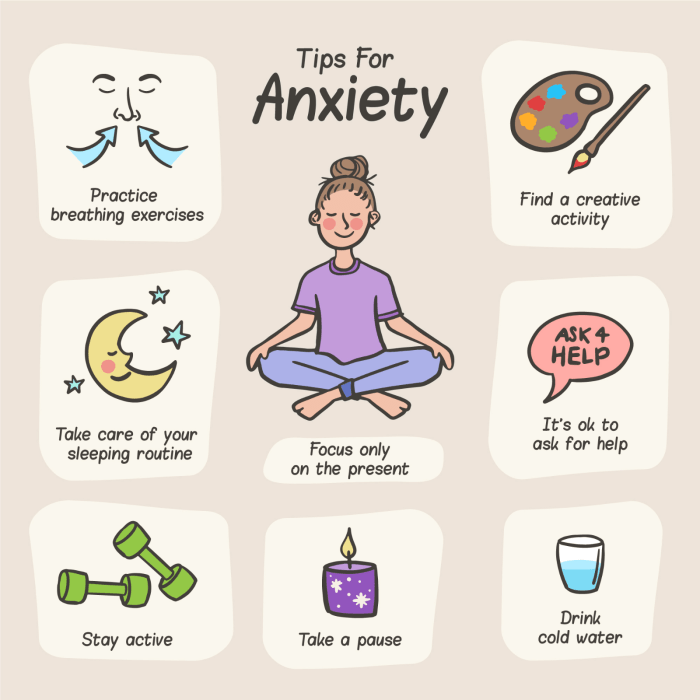
Mental health refers to our emotional, psychological, and social well-being. It affects how we think, feel, and act, playing a crucial role in determining how we handle stress, relate to others, and make choices in our daily lives.
Anxiety is a common mental health condition characterized by feelings of worry, nervousness, or unease about something with an uncertain outcome. It is closely connected to mental health as untreated mental health issues can often manifest as anxiety disorders.
Impact of Untreated Mental Health Issues
- Impaired Daily Functioning: Untreated mental health issues can significantly impact daily activities such as work, school, relationships, and self-care routines.
- Physical Health Effects: Mental health concerns left unaddressed can lead to physical health problems such as headaches, digestive issues, and insomnia.
- Social Isolation: Individuals experiencing untreated mental health issues may withdraw from social interactions, leading to feelings of loneliness and isolation.
- Risk of Substance Abuse: Some individuals may turn to substances like alcohol or drugs as a way to cope with untreated mental health issues, leading to substance abuse problems.
Understanding Anxiety
Anxiety is a natural response to stress or danger, often characterized by feelings of worry, fear, or unease. It is a common emotion experienced by many individuals and can vary in intensity from mild to severe. Common symptoms of anxiety include restlessness, difficulty concentrating, irritability, muscle tension, and sleep disturbances.Anxiety can manifest in different forms, leading to various types of anxiety disorders.
Some of the most common types include Generalized Anxiety Disorder (GAD), Panic Disorder, Social Anxiety Disorder, and Specific Phobias. Each type has its own set of symptoms and triggers, impacting individuals in different ways.Physically, anxiety can manifest through symptoms such as increased heart rate, sweating, trembling, and dizziness. Emotionally, individuals may experience feelings of fear, apprehension, or a sense of impending doom.
These physical and emotional manifestations can have a significant impact on daily functioning and overall well-being.
Mental Health Strategies for Managing Anxiety
Anxiety can be overwhelming, but there are practical techniques that can help you cope and improve your mental well-being.
Benefits of Mindfulness and Meditation
- Practicing mindfulness can help you stay present and focused, reducing the tendency to dwell on anxious thoughts.
- Meditation promotes relaxation and teaches you to observe your thoughts without judgment, which can reduce anxiety levels over time.
- Both mindfulness and meditation can improve self-awareness and emotional regulation, leading to better stress management.
Role of Exercise in Managing Anxiety
- Regular physical activity releases endorphins, which are natural mood lifters that can reduce feelings of anxiety.
- Exercise can help you channel restless energy in a positive way, reducing tension and promoting relaxation.
- Engaging in physical activity can also improve sleep quality, which is essential for managing anxiety and overall mental health.
Seeking Professional Help
Seeking professional help is a crucial step in effectively managing anxiety. Therapists and counselors are trained to provide support, guidance, and coping strategies to help individuals navigate their anxiety symptoms.Medication can be used in conjunction with therapy for treating anxiety disorders. Psychiatrists may prescribe medications such as antidepressants or anti-anxiety drugs to help alleviate symptoms. These medications can work hand in hand with therapy to provide a comprehensive approach to managing anxiety.
Benefits of Support Groups or Group Therapy
Support groups or group therapy can offer a sense of community and understanding for individuals dealing with anxiety. Sharing experiences and coping strategies with others who are going through similar challenges can be incredibly validating and empowering. Group settings also provide a safe space for individuals to practice social skills and receive feedback from peers and professionals.
In conclusion, implementing these strategies can significantly impact how individuals cope with anxiety and improve their overall mental well-being. By seeking professional help when needed and utilizing a combination of therapies, individuals can take proactive steps towards managing their anxiety successfully.
User Queries
How can I differentiate between normal anxiety and an anxiety disorder?
Normal anxiety is usually a temporary response to stress, while an anxiety disorder involves excessive, prolonged worry that can interfere with daily life.
Are there specific exercises that are more effective in managing anxiety?
Exercises like yoga, aerobic workouts, and walking have been shown to be beneficial in reducing anxiety levels.
Can support groups really help in managing anxiety?
Support groups provide a sense of community and understanding, which can be extremely beneficial in coping with anxiety and not feeling alone in the journey towards better mental health.


