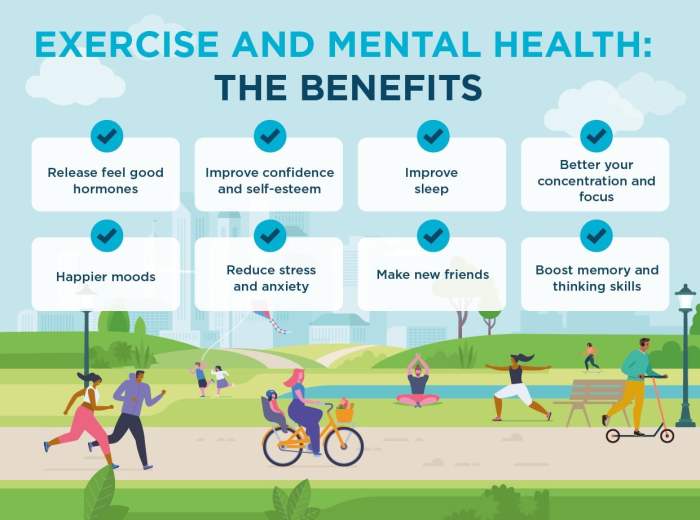
Exploring the profound impact of exercise on mental health, this introduction delves into the various ways physical activity can enhance well-being, from reducing stress to boosting mood and self-esteem. As we navigate through the intricate relationship between exercise and mental wellness, we uncover the transformative power of movement in fostering a healthier mind and body.
Mental Health Benefits of Exercise
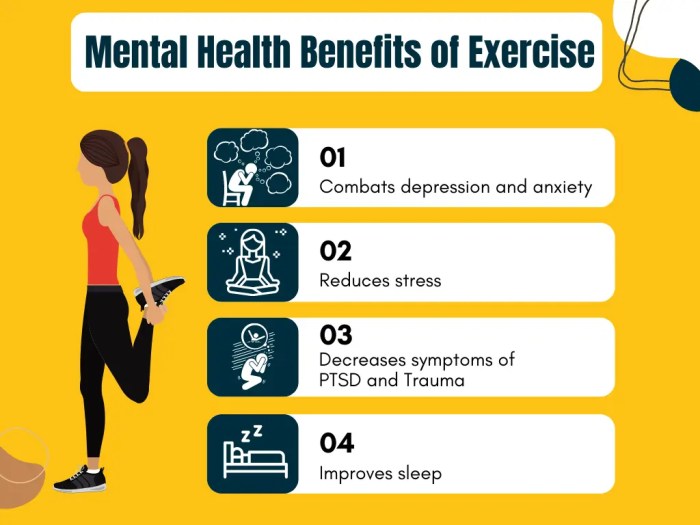
Regular exercise has been shown to have numerous positive effects on mental health. Physical activity can help reduce symptoms of depression, anxiety, and stress, while also improving overall mood and boosting self-esteem.
Types of Exercises for Mental Health
- Aerobic exercises such as running, swimming, or cycling can increase the production of endorphins, the brain’s feel-good neurotransmitters.
- Strength training exercises like weightlifting can help improve self-esteem and body image, leading to a more positive outlook on life.
- Yoga and Pilates focus on mindfulness and relaxation, reducing stress and anxiety levels.
Impact of Exercise on Reducing Stress and Anxiety
Regular physical activity can help lower cortisol levels, the body’s stress hormone, leading to a calmer and more relaxed state of mind. Exercise also promotes the release of endorphins, which act as natural painkillers and mood elevators.
Exercise to Improve Mood and Boost Self-Esteem
Engaging in physical activity can help increase feelings of accomplishment and self-worth, leading to a more positive self-image. The sense of achievement from reaching fitness goals can boost confidence and overall mood, contributing to a healthier mental state.
Physical Activity and Brain Health
Regular physical activity has numerous benefits for brain health, as it can improve cognitive function, mood, and overall mental well-being. Exercise has been shown to have a positive impact on brain function, including enhancing memory, focus, and decision-making skills.
Exercise and Mental Clarity
Regular exercise is linked to improved mental clarity and cognitive function. Physical activity increases blood flow to the brain, delivering oxygen and nutrients that are essential for optimal brain health. This increased blood flow can result in sharper focus, better concentration, and enhanced problem-solving abilities.
Preventing Cognitive Decline
Engaging in physical activity on a regular basis can help prevent cognitive decline associated with aging. Studies have shown that individuals who exercise regularly have a lower risk of developing conditions such as dementia and Alzheimer’s disease. Exercise can also help improve overall brain health and resilience to age-related cognitive decline.
Beneficial Exercises for Brain Health
Aerobic exercises
Activities like running, swimming, or cycling can help improve cardiovascular health, which in turn benefits brain function.
Strength training
Lifting weights or resistance training can enhance cognitive abilities and promote overall brain health.
Yoga and meditation
Mind-body exercises like yoga and meditation can reduce stress, improve focus, and enhance mental clarity.
High-intensity interval training (HIIT)
HIIT workouts can boost cognitive function and memory by increasing levels of brain-derived neurotrophic factor (BDNF), a protein that supports brain health.Regular participation in these types of exercises can contribute to better brain health, cognitive function, and overall mental well-being.
Exercise as a Stress Reliever
Regular physical activity can be a powerful tool in managing stress and promoting mental well-being. Exercise helps release endorphins, which are known as the body’s natural stress relievers. These chemicals interact with receptors in the brain to reduce the perception of pain and trigger a positive feeling in the body.
Tips for Incorporating Exercise into Daily Routine
- Start small: Begin with short sessions of exercise, such as a 10-minute walk or a quick yoga session, and gradually increase the duration as you build stamina.
- Find activities you enjoy: Whether it’s dancing, cycling, swimming, or playing a sport, choose activities that you find fun and engaging to make it easier to stick to a routine.
- Schedule it in: Treat exercise like any other important appointment and block out time in your day to prioritize physical activity.
- Combine exercise with other tasks: Multitask by incorporating exercise into your daily routine, such as taking the stairs instead of the elevator or doing squats while brushing your teeth.
Physiological Mechanisms of Exercise in Reducing Stress Levels
Regular exercise can help reduce levels of cortisol, the body’s stress hormone, and increase the production of endorphins and other neurotransmitters that improve mood. Physical activity also promotes better sleep, which is essential for stress management and overall mental health.
Personal Anecdotes on the Benefits of Exercise in Stress Management
“I found that going for a run after a long day at work helped me clear my mind and unwind. It became my go-to stress reliever, and I noticed a significant improvement in my mood and overall stress levels.” – Sarah
“Incorporating yoga into my daily routine has been life-changing for me. The combination of movement, mindfulness, and deep breathing has helped me cope with stress in a more positive way.” – Alex
Social Interaction and Mental Well-being
Regular social interaction is crucial for maintaining good mental health. Human beings are social creatures, and connecting with others helps reduce feelings of isolation and loneliness, which can have a negative impact on mental well-being.
Impact of Group Exercises and Team Sports
Participating in group exercises or team sports can have a positive effect on mental health by fostering a sense of camaraderie and belonging. Working out with others creates a supportive environment where individuals can motivate each other, share experiences, and build friendships. This can lead to increased self-esteem, reduced stress levels, and improved overall mental health.
- Group exercises provide a sense of community and accountability, making it easier to stick to a regular fitness routine.
- Team sports encourage teamwork, communication, and cooperation, which are essential skills for social interaction and mental well-being.
- Exercising with others can make workouts more enjoyable and engaging, leading to a boost in mood and motivation.
Finding Exercise Partners and Group Fitness Activities
To find exercise partners or join group fitness activities, consider the following tips:
- Join local fitness classes or clubs that align with your interests and fitness goals.
- Utilize social media platforms or fitness apps to connect with like-minded individuals in your area.
- Reach out to friends, family members, or coworkers who share a passion for fitness and exercise together.
- Attend community events, charity runs, or sports leagues to meet new people and engage in group activities.
In conclusion, the discussion on the mental health benefits of exercise sheds light on the undeniable advantages of incorporating physical activity into daily routines. By embracing the positive effects of exercise on stress levels, mood, and social interactions, individuals can embark on a journey towards improved mental well-being and overall quality of life.
User Queries
How often should I exercise to experience mental health benefits?
Consistency is key. Aim for at least 150 minutes of moderate-intensity exercise per week to reap the mental health benefits.
Can any type of exercise improve mental well-being?
While different exercises offer unique benefits, any form of physical activity that you enjoy and can do consistently can positively impact your mental health.
Is there a connection between exercise and improved cognitive function?
Absolutely. Exercise has been shown to enhance brain function, memory, and cognitive abilities, contributing to better overall mental well-being.
How can I motivate myself to exercise regularly for mental health benefits?
Setting realistic goals, finding enjoyable activities, and seeking social support can all help in staying motivated to exercise for mental wellness.


