Embark on a journey through coping strategies, social support, physical health, and seeking professional help to navigate the challenges of mental health during the COVID-19 era.
Learn how to maintain balance, stay connected, prioritize self-care, and access necessary resources for a healthier mind and body.
Coping Strategies
During the COVID-19 pandemic, it is crucial to implement effective coping mechanisms to manage your mental health. These strategies can help reduce stress, anxiety, and feelings of isolation, ultimately promoting overall well-being.
Importance of Self-Care Routines
- Establish a daily routine: Creating a schedule can provide structure and stability, helping you feel more in control of your day.
- Practice mindfulness: Engage in activities like meditation, deep breathing exercises, or yoga to stay present and calm your mind.
- Stay connected: Maintain relationships with friends and family through virtual means to combat feelings of loneliness.
- Engage in hobbies: Pursuing activities you enjoy can serve as a distraction and bring a sense of fulfillment.
Maintaining a Healthy Work-Life Balance
- Set boundaries: Establish clear boundaries between work and personal time to prevent burnout and maintain productivity.
- Take breaks: Incorporate short breaks throughout your workday to recharge and refocus your energy.
- Prioritize self-care: Make time for activities that promote relaxation and well-being, such as exercise, reading, or creative pursuits.
- Seek support: Don’t hesitate to reach out to colleagues or supervisors if you are feeling overwhelmed or need assistance in managing your workload.
Social Support
During challenging times like the COVID-19 pandemic, social connections play a crucial role in improving mental well-being. Having a support system can help individuals cope with stress, anxiety, and feelings of isolation.
Staying Connected Virtually
Here are some tips on how to stay connected with friends and family virtually to combat feelings of isolation:
- Schedule regular video calls or virtual gatherings to stay in touch.
- Use social media platforms to share updates and stay connected with loved ones.
- Join online group activities or classes to interact with others who share similar interests.
- Send thoughtful messages or care packages to show you care, even from a distance.
Support Groups and Online Communities
Support groups and online communities can provide emotional support for individuals struggling with mental health issues. Here’s how they can help:
- Offer a safe space to share experiences, thoughts, and feelings with others who understand.
- Provide a sense of belonging and connection with like-minded individuals.
- Give access to valuable resources, information, and coping strategies shared by members.
- Create a supportive environment where individuals can receive encouragement and empathy from others.
Physical Health
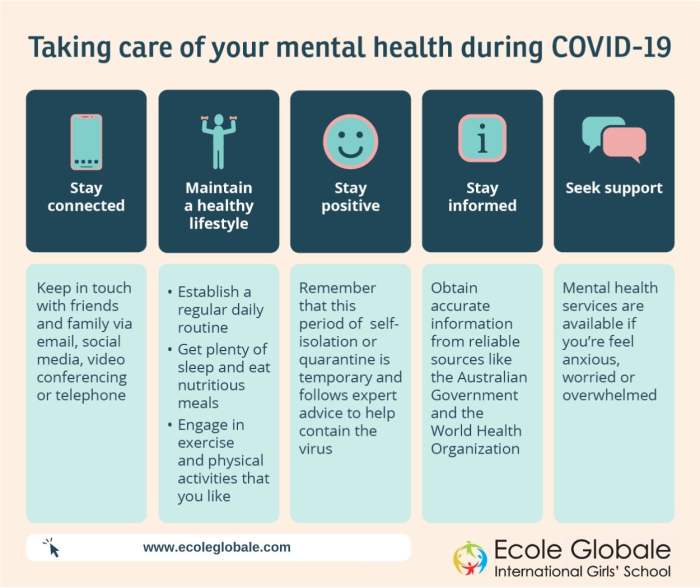
Regular physical activity plays a crucial role in promoting mental well-being, especially during challenging times like the COVID-19 pandemic. Exercise has been shown to reduce symptoms of anxiety and depression, improve mood, and increase overall feelings of well-being.
Simple Exercises and Activities
- Yoga: Practicing yoga can help reduce stress and anxiety levels, as well as improve flexibility and strength.
- Walking: Taking a daily walk, even if it’s just around your neighborhood, can boost your mood and energy levels.
- Bodyweight exercises: Simple exercises like push-ups, squats, and planks can be done at home without any equipment to help release endorphins and reduce stress.
- Dance: Putting on your favorite music and dancing around can be a fun way to get moving and lift your spirits.
Importance of Healthy Diet and Sleep Routine
Maintaining a healthy diet and getting an adequate amount of sleep are essential for supporting overall mental well-being. A nutritious diet rich in fruits, vegetables, whole grains, and lean proteins provides the necessary nutrients for brain function and mood regulation. Additionally, getting enough quality sleep helps with cognitive function, emotional regulation, and stress management.
Seeking Professional Help
Seeking professional help for mental health concerns during COVID-19 is crucial when symptoms start to interfere with daily functioning or become overwhelming. It is also necessary if you are experiencing thoughts of self-harm or suicide.
Accessing Mental Health Services Remotely
- Teletherapy or online counseling sessions can be a convenient and effective way to access mental health support from the comfort of your home.
- Many mental health providers offer virtual appointments through video calls or phone consultations.
- Online therapy platforms and mental health apps can also provide resources and tools to help manage symptoms and connect with professional help.
Benefits of Therapy or Counseling
- Therapy can provide a safe space to explore and process your thoughts and emotions, helping you gain a better understanding of your mental health concerns.
- Counseling can teach coping strategies and techniques to manage anxiety, depression, or other mental health issues exacerbated by the pandemic.
- A therapist can offer support, validation, and guidance to help you navigate challenging emotions and situations during these difficult times.
As we conclude this insightful discussion, remember that prioritizing your mental well-being is crucial during these unprecedented times. Take small steps each day towards self-care and seek support when needed to navigate through challenges with resilience.
General Inquiries
How can I manage stress effectively during COVID-19?
Try incorporating relaxation techniques such as deep breathing, meditation, or yoga into your daily routine. It can help alleviate stress and promote mental well-being.
What are some ways to stay connected with loved ones while social distancing?
Utilize video calls, phone chats, or virtual game nights to maintain social connections with friends and family. Sharing experiences virtually can combat feelings of isolation.
When should I consider seeking professional help for my mental health?
If you’re struggling to cope, experiencing persistent anxiety or depression, or having difficulty functioning in daily life, it may be time to reach out to a mental health professional for support.


