Embark on a journey exploring unique strategies to promote mental health awareness this month. From engaging community discussions to creative events, discover how social media can play a pivotal role in spreading awareness effectively.
Learn about the significance of mental health education initiatives, self-care practices for mental well-being, and ways to destigmatize mental health in your community.
Mental Health Awareness Month Ideas
Mental Health Awareness Month is a crucial time to focus on promoting understanding and support for mental health issues. Here are some unique ways to raise awareness and engage the community:
Creative Events and Activities
- Host a virtual mental health fair with informational booths and resources for attendees.
- Organize a community art project focused on mental health themes to spark conversations.
- Offer free mental health screenings or workshops to provide education and support.
Utilizing Social Media
- Start a social media campaign with daily mental health tips, resources, and personal stories.
- Encourage followers to share their own experiences with mental health using a dedicated hashtag.
- Collaborate with influencers or mental health advocates to reach a wider audience online.
Mental Health Education Initiatives
The importance of educating people about mental health cannot be overstated. By increasing awareness and understanding of mental health issues, individuals are better equipped to recognize symptoms, seek help, and support those around them. This ultimately leads to a more compassionate and informed society.
Utilizing Resources for Mental Health Education
- Online platforms: Websites like MentalHealth.gov and the National Alliance on Mental Illness (NAMI) provide valuable information and resources for mental health education.
- Training programs: Organizations can invest in mental health first aid training for employees to learn how to recognize and respond to mental health crises.
- Public campaigns: Initiatives like Mental Health Awareness Month and World Mental Health Day raise awareness and promote education on mental health topics.
Incorporating Mental Health Education in Schools and Workplaces
- School curriculum: Introducing mental health education in schools can help destigmatize mental illness and provide students with the knowledge and skills to maintain good mental well-being.
- Employee workshops: Workplaces can organize workshops on stress management, self-care, and mental health awareness to support the well-being of their staff.
- Peer support programs: Establishing peer support networks within schools and workplaces can create safe spaces for individuals to discuss mental health issues and seek help.
Benefits of Early Mental Health Education and Intervention
- Prevention of mental health disorders: Early education can help individuals recognize risk factors and take proactive steps to maintain good mental health.
- Reduced stigma: Educating individuals from a young age can reduce the stigma associated with mental illness and promote a more inclusive and understanding society.
- Improved outcomes: Early intervention can lead to better treatment outcomes and overall well-being for individuals struggling with mental health issues.
Self-Care Practices for Mental Health
Self-care plays a crucial role in maintaining good mental health. By incorporating self-care practices into your routine, you can improve your overall well-being and reduce stress and anxiety levels.
List of Self-Care Activities
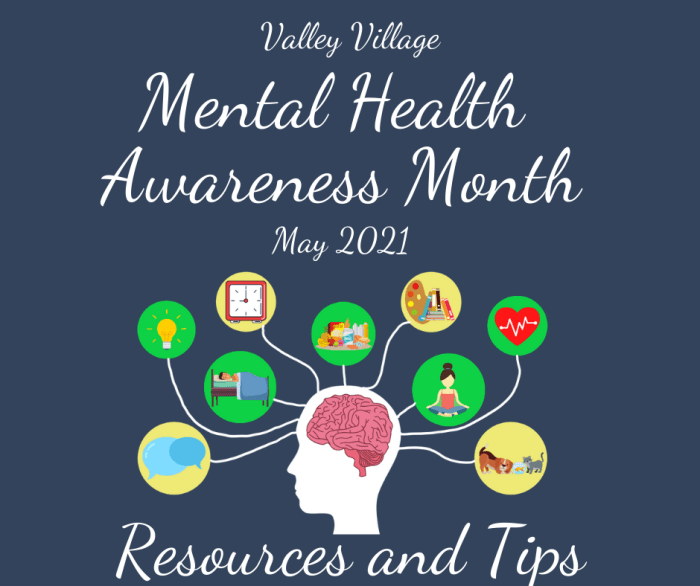
- Practice mindfulness and meditation to stay present and calm.
- Engage in regular physical exercise to boost mood and reduce symptoms of depression.
- Ensure you get enough sleep to support cognitive function and emotional well-being.
- Connect with loved ones and build a support system for emotional support.
- Prioritize healthy eating habits to nourish your body and mind.
Tips for Creating a Self-Care Routine
- Identify activities that bring you joy and incorporate them into your daily schedule.
- Set boundaries to protect your time and energy from draining activities or people.
- Practice self-compassion and be kind to yourself, especially in challenging times.
- Experiment with different self-care practices to find what works best for you.
- Schedule regular self-care time in your calendar to ensure you prioritize your well-being.
Impact of Self-Care on Mental Well-Being
Self-care practices have a profound impact on overall mental well-being. By taking care of yourself and prioritizing your needs, you can reduce stress, improve mood, and enhance resilience in facing life’s challenges.
Connection Between Self-Care and Mental Health Awareness
Self-care is closely linked to mental health awareness as it emphasizes the importance of taking proactive steps to maintain good mental health. By promoting self-care practices, we can raise awareness about the significance of mental well-being and encourage others to prioritize their mental health.
Destigmatizing Mental Health
Reducing the stigma around mental health is crucial for creating a more supportive and inclusive environment for individuals facing mental health challenges.
Importance of Destigmatization
Destigmatizing mental health can encourage individuals to seek help, promote open conversations about mental health, and increase understanding and empathy towards those struggling with mental health issues.
Personal Stories of Destigmatization
- An example of successful destigmatization efforts is the “Bell Let’s Talk” campaign in Canada, which aims to raise awareness and reduce stigma around mental health through open dialogue and fundraising for mental health initiatives.
- Sharing personal stories of overcoming mental health challenges can also help break down barriers and show others that seeking help is a sign of strength, not weakness.
Language and Attitudes in Destigmatization
The language we use and the attitudes we hold towards mental health can greatly impact destigmatization efforts. By using respectful and non-judgmental language, we can create a safer space for individuals to open up about their struggles without fear of stigma or discrimination.
Ways to Contribute to Destigmatizing Mental Health
- Educate yourself and others about mental health to dispel myths and misconceptions.
- Speak up against stigma and discrimination when you encounter it, whether it’s in conversations, media, or policies.
- Show empathy and support to those struggling with mental health challenges, and encourage open conversations about mental health in your community.
In conclusion, embracing Mental Health Awareness Month Ideas can lead to a more informed and supportive community. By taking proactive steps in education, self-care, and destigmatization, we pave the way for better mental well-being for all.
Questions and Answers
How can I promote mental health awareness uniquely?
You can organize creative events, engage in community discussions, or leverage social media effectively to spread awareness.
What are some self-care practices for better mental health?
Self-care activities like mindfulness exercises, setting boundaries, and practicing gratitude can promote mental well-being.
Why is destigmatizing mental health important?
Reducing stigma around mental health encourages open conversations, access to support, and overall well-being for individuals.
How can individuals contribute to destigmatizing mental health?
By sharing personal stories, using inclusive language, and promoting understanding, individuals can play a crucial role in destigmatization efforts.


