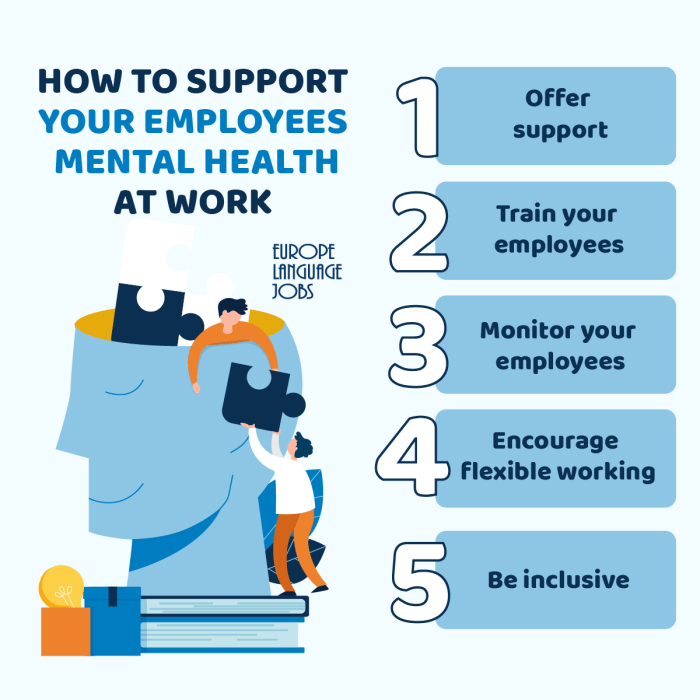
Mental Health in the Workplace sets the stage for this enthralling narrative, offering readers a glimpse into a story that is rich in detail with casual formal language style and brimming with originality from the outset.
In today’s fast-paced work environment, the impact of mental health on employees is more crucial than ever. Understanding the significance of mental well-being and its effects on productivity is essential for creating a supportive workplace. Let’s delve deeper into the complexities of Mental Health in the Workplace and explore strategies for fostering a healthy work culture.
Mental Health

Understanding mental health is crucial in maintaining overall well-being. It refers to our emotional, psychological, and social well-being, affecting how we think, feel, and act.
Importance of Mental Health Awareness
Creating awareness around mental health is essential to reduce stigma, encourage early intervention, and promote a supportive workplace culture.
Common Mental Health Disorders in the Workplace
- Anxiety Disorders: Characterized by excessive fear or worry, affecting productivity and decision-making.
- Depression: Leading to persistent feelings of sadness, loss of interest, and difficulty concentrating.
- Stress: Resulting from work pressure, deadlines, and high demands, impacting overall mental well-being.
- Substance Abuse: Coping mechanism for underlying mental health issues, leading to impairment in work performance.
Statistics on Mental Health in the Workplace
According to the World Health Organization, depression and anxiety disorders cost the global economy $1 trillion each year in lost productivity. In the U.S., 1 in 5 adults experience mental illness, with 18% of the workforce affected by mental health issues annually.
Impact of Mental Health in the Workplace
Addressing mental health in the workplace is crucial as it can significantly impact work performance and overall productivity. When employees are struggling with mental health issues, it can have various effects on their ability to function effectively in their roles.
Effects of Mental Health on Work Performance
Mental health issues such as anxiety, depression, or burnout can lead to decreased concentration, motivation, and decision-making abilities. This can result in lower productivity, missed deadlines, and poor quality of work.
Toxic Work Environment and Mental Health
A toxic work environment characterized by high stress, excessive workload, poor communication, and lack of support can exacerbate mental health problems. This can lead to increased levels of anxiety, depression, and overall dissatisfaction among employees.
Absenteeism and Presenteeism Due to Mental Health Problems
- Employees experiencing mental health issues may be more likely to take frequent sick leaves due to their condition.
- On the other hand, presenteeism, where employees show up for work but are unable to perform at their best due to mental health issues, can also be prevalent.
- Both absenteeism and presenteeism can impact the overall productivity and morale of the workplace.
Relationship Between Mental Health and Productivity
Addressing mental health concerns in the workplace and providing support can have a positive impact on productivity. When employees feel valued, supported, and mentally well, they are more likely to perform better, collaborate effectively, and contribute to the success of the organization.
Creating a Supportive Work Environment
Creating a supportive work environment is crucial for promoting mental well-being in the workplace. When employees feel supported and valued, they are more likely to thrive both personally and professionally. Company policies play a significant role in ensuring that employees have the resources and assistance they need to maintain good mental health.
Strategies for Promoting Mental Well-being
- Encouraging open communication: Creating a culture where employees feel comfortable discussing their mental health concerns without fear of stigma.
- Providing mental health training: Educating employees and managers on mental health awareness and how to support colleagues in need.
- Offering flexible work arrangements: Allowing for a better work-life balance can reduce stress and improve overall well-being.
Role of Company Policies
- Implementing clear policies on mental health support: Outlining procedures for seeking help, accessing resources, and addressing mental health issues in the workplace.
- Offering mental health benefits: Providing access to counseling services, therapy sessions, or mental health days off.
Employee Assistance Programs and Initiatives
- Confidential counseling services: Offering employees a safe space to discuss their mental health concerns with trained professionals.
- Wellness programs: Promoting activities such as yoga classes, mindfulness sessions, or stress management workshops.
Benefits of a Supportive Work Culture
- Increased employee morale and productivity: When employees feel supported, they are more engaged and motivated to perform well.
- Reduced absenteeism and turnover: A supportive work environment can lead to lower rates of absenteeism and higher retention rates.
- Enhanced company reputation: Organizations that prioritize mental health are viewed more favorably by employees, customers, and the public.
Mental Health Resources and Support
Employees in the workplace have access to various mental health resources and support systems to help them navigate challenges and maintain their well-being.
Sources of Mental Health Support
- Employee Assistance Programs (EAPs) offering counseling and support services.
- Mental health hotlines for immediate assistance and crisis intervention.
- Online mental health platforms providing resources, tools, and information.
- Access to mental health professionals through health insurance coverage.
Destigmatizing Mental Health Conversations
It is crucial to create a culture where mental health discussions are normalized and encouraged in the workplace to eliminate stigma.
Open communication and education can help break down barriers and promote understanding.
Tips for Supporting Employees with Mental Health Challenges
- Encourage open dialogue and active listening to understand employees’ needs.
- Offer flexible work arrangements to accommodate mental health concerns.
- Provide mental health training for managers to recognize and address issues effectively.
- Refer employees to appropriate resources and support services when needed.
Training Programs for Mental Health Awareness
- Organize workshops or seminars to raise awareness about mental health in the workplace.
- Train employees on how to identify signs of mental health issues and offer support.
- Collaborate with mental health experts to provide specialized training programs.
As we conclude our exploration of Mental Health in the Workplace, it’s evident that prioritizing mental well-being is not just a trend but a necessity in modern workplaces. By implementing supportive policies, promoting open conversations, and providing access to resources, organizations can create environments where employees thrive both personally and professionally. Remember, a mentally healthy workforce is a productive workforce.
FAQ Summary
How can I promote mental well-being in the workplace?
To promote mental well-being, organizations can offer employee assistance programs, regular mental health training, flexible work arrangements, and access to counseling services.
What are some common mental health disorders that impact individuals in the workplace?
Common mental health disorders include anxiety, depression, stress-related disorders, and burnout, all of which can affect work performance and overall well-being.
How can managers support employees with mental health challenges?
Managers can support employees by creating an open and supportive environment, encouraging work-life balance, providing resources for mental health support, and addressing any concerns or issues promptly.


