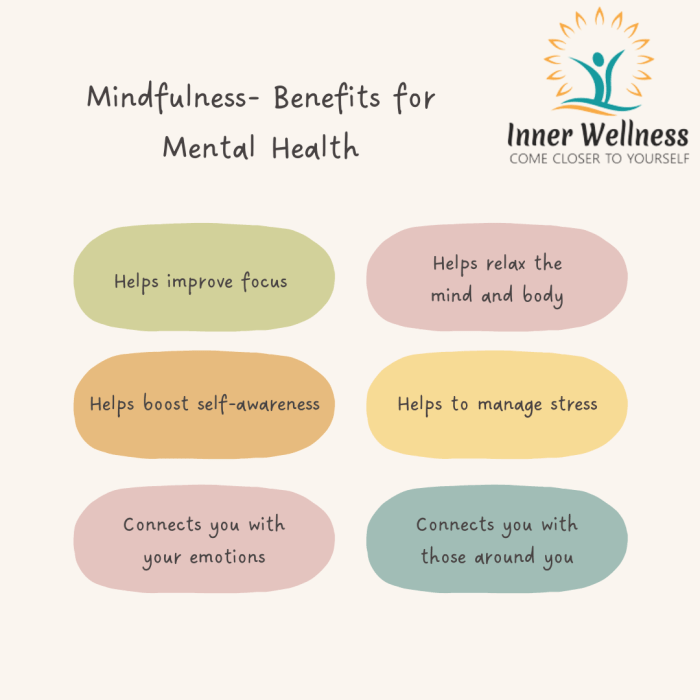
As Mindfulness and Mental Health takes center stage, this opening passage beckons readers with a captivating overview of the profound impact mindfulness practices can have on mental well-being. Exploring the powerful connection between mindfulness and mental health, this topic delves into various techniques and benefits that contribute to a holistic approach to wellness.
Introduction to Mindfulness and Mental Health
Mindfulness is the practice of being fully present and aware of our thoughts, feelings, sensations, and surroundings without judgment. It plays a crucial role in mental health by helping individuals manage stress, anxiety, and depression more effectively.
Incorporating mindfulness practices into daily routines is essential for maintaining mental well-being. By cultivating mindfulness, individuals can develop a greater sense of self-awareness, emotional regulation, and resilience to cope with life’s challenges.
Examples of How Mindfulness Can Positively Impact Mental Health
- Reducing Stress: Mindfulness meditation techniques can lower cortisol levels, the stress hormone, promoting a sense of calm and relaxation.
- Enhancing Emotional Regulation: Mindfulness allows individuals to observe their emotions without reacting impulsively, leading to better control over mood swings and negative feelings.
- Improving Focus and Concentration: Practicing mindfulness exercises can sharpen attention and cognitive abilities, increasing productivity and mental clarity.
- Boosting Resilience: Mindfulness helps individuals build psychological resilience by fostering acceptance of difficult emotions and situations, leading to better adaptability and coping mechanisms.
Benefits of Mindfulness for Mental Health
Mindfulness practices have been shown to have numerous benefits for mental health. They can help reduce stress and anxiety, improve focus and concentration, as well as enhance emotional regulation and resilience.
Reducing Stress and Anxiety
- Mindfulness techniques such as deep breathing and body scans can help individuals relax and calm their minds, reducing the levels of stress and anxiety they experience.
- By focusing on the present moment without judgment, mindfulness can help individuals let go of worries about the past or future, leading to a decrease in stress levels.
Improving Focus and Concentration
- Practicing mindfulness can train the brain to focus on the task at hand, improving concentration and reducing distractions.
- Regular mindfulness meditation has been linked to changes in the brain that enhance cognitive control and attentional processes, leading to better focus.
Enhancing Emotional Regulation and Resilience
- Mindfulness can help individuals become more aware of their emotions and thoughts, allowing them to respond to challenging situations with greater clarity and resilience.
- By practicing mindfulness, individuals can develop the ability to regulate their emotions effectively, leading to improved emotional well-being and coping skills.
Techniques and Practices for Mindfulness
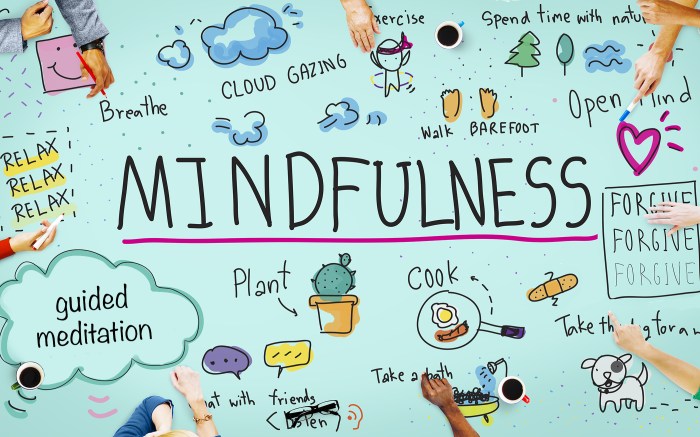
Practicing mindfulness involves various techniques that can help individuals cultivate awareness and reduce stress. These techniques can be easily incorporated into daily routines to promote mental well-being.
Mindfulness Techniques
- Meditation: Meditation involves focusing the mind on a particular object, thought, or activity to train attention and awareness. This practice can help calm the mind and increase clarity.
- Deep Breathing: Deep breathing exercises can help individuals connect with their breath and promote relaxation. By focusing on the breath, one can become more present in the moment.
- Body Scans: Body scans involve directing attention to different parts of the body, noticing sensations without judgment. This practice can help individuals develop body awareness and release tension.
Mindfulness-based Cognitive Therapy (MBCT)
Mindfulness-based Cognitive Therapy (MBCT) combines mindfulness practices with cognitive behavioral techniques to help individuals manage and prevent relapse of depression and anxiety. By integrating mindfulness into therapy, individuals can learn to relate differently to their thoughts and emotions.
Examples of Mindfulness Exercises
- Mindful Walking: Paying attention to each step and the sensations in the body while walking can help bring focus to the present moment.
- Body Scan Meditation: Starting from the top of the head and moving down to the toes, scanning the body for any tension or discomfort can promote relaxation and awareness.
- Loving-Kindness Meditation: Sending positive intentions and well-wishes to oneself and others can cultivate feelings of compassion and connection.
Mindfulness in Different Mental Health Conditions
Mindfulness practices have shown promise in helping individuals cope with various mental health conditions. Let’s explore how mindfulness can be beneficial in managing different mental health issues.
Managing Depression and Mood Disorders
For individuals struggling with depression and mood disorders, mindfulness techniques can help increase self-awareness and emotional regulation. By focusing on the present moment and accepting thoughts and feelings without judgment, individuals can learn to navigate their emotions more effectively.
Benefits for Individuals with PTSD and Trauma-Related Conditions
Mindfulness has been found to be effective in reducing symptoms of PTSD and trauma-related conditions by helping individuals develop a sense of safety and grounding in the present moment. By practicing mindfulness, individuals can learn to manage intrusive thoughts and memories associated with trauma.
Impact on Reducing Symptoms of ADHD and Improving Overall Mental Well-being
Studies have shown that mindfulness practices can help reduce symptoms of ADHD by improving focus, attention, and impulse control. Additionally, incorporating mindfulness into daily routines can enhance overall mental well-being by reducing stress and anxiety levels.
Mindfulness Practices in Daily Life
Practicing mindfulness in daily life can significantly improve our mental health and overall well-being. It involves being fully present in the moment and paying attention to our thoughts, feelings, and surroundings without judgment.
Tips for Cultivating Mindfulness in Everyday Activities
- Start your day with a mindfulness meditation or breathing exercise to set a positive tone for the day.
- Practice mindful eating by savoring each bite, paying attention to the taste, texture, and sensations of the food.
- Take short mindfulness breaks throughout the day to check in with yourself and bring awareness to your thoughts and emotions.
Importance of Being Present and Mindful in Interactions with Others
- Active listening is a key aspect of mindful communication, allowing you to fully engage with others without distractions.
- Being present in conversations helps build stronger connections and fosters empathy and understanding in relationships.
- Mindful communication reduces misunderstandings and conflicts by promoting clarity and intention in interactions.
Examples of Integrating Mindfulness into Work, Relationships, and Self-Care Practices
- At work, practice mindfulness by taking short breaks to refocus your attention, prioritize tasks mindfully, and practice deep breathing exercises to reduce stress.
- In relationships, incorporate mindfulness by practicing gratitude, active listening, and expressing empathy towards your partner or loved ones.
- For self-care, engage in mindfulness practices such as yoga, meditation, or mindful walking to nurture your mental and emotional well-being.
The Science Behind Mindfulness and Mental Health
Research studies have shown that mindfulness practices have a significant impact on the brain and mental health. These practices have been found to reduce stress, improve focus and concentration, and enhance overall well-being.
Neurobiological Mechanisms of Mindfulness
- One of the key mechanisms behind the benefits of mindfulness is the impact it has on the brain’s structure and functioning. Studies have shown that regular mindfulness practice can lead to changes in brain regions associated with emotion regulation and self-awareness.
- Mindfulness has been found to reduce the activity in the amygdala, the brain’s fear center, which helps in managing stress and anxiety more effectively.
- Additionally, mindfulness practices have been linked to increased gray matter density in areas of the brain responsible for memory, learning, and cognitive processing.
Recent Advancements in Mindfulness-based Interventions
- Recent studies have explored the use of mindfulness-based interventions in treating various mental health conditions such as depression, anxiety, and PTSD.
- These interventions often involve a combination of mindfulness practices, cognitive-behavioral therapy, and other therapeutic techniques to address the underlying causes of mental health issues.
- Advancements in technology have also led to the development of mindfulness apps and online programs, making mindfulness practices more accessible to a wider audience.
Mindfulness Resources and Apps
Exploring the world of mindfulness resources and apps can greatly enhance your mental well-being. Whether you’re looking for guided meditations, breathing exercises, or daily mindfulness reminders, there are plenty of options to choose from.
Popular Mindfulness Apps
- Headspace: A popular app offering guided meditations and mindfulness exercises for beginners and advanced practitioners alike.
- Calm: Known for its soothing nature sounds and bedtime stories, Calm helps users relax and unwind.
- Insight Timer: With a vast library of guided meditations and talks from mindfulness experts, Insight Timer is a favorite among users.
Online Resources and Courses
For those interested in diving deeper into mindfulness, there are numerous online resources, courses, and workshops available.
- Mindful.org: A website offering articles, guided meditations, and resources for incorporating mindfulness into daily life.
- Coursera: Platforms like Coursera offer courses on mindfulness-based stress reduction (MBSR) and other related topics.
- The Mindfulness Summit: An annual online event featuring talks and interviews with leading mindfulness teachers and researchers.
Technology and Mindfulness
Technology is increasingly being used to promote mindfulness and mental health awareness, making it more accessible to people around the world.
- Wearable Devices: Smartwatches and fitness trackers often include mindfulness features like guided breathing exercises and stress tracking.
- Virtual Reality (VR): VR apps and experiences are being developed to provide immersive mindfulness practices and relaxation techniques.
- Mindfulness Apps for Children: There are apps designed specifically for children to introduce them to mindfulness and help them develop emotional awareness.
In conclusion, the discussion on Mindfulness and Mental Health highlights the transformative potential of mindfulness in cultivating emotional resilience, reducing stress, and fostering overall well-being. By integrating mindfulness practices into daily life, individuals can embark on a journey towards greater self-awareness and mental clarity.
FAQ Guide
How can mindfulness benefit mental health?
Mindfulness can benefit mental health by reducing stress, enhancing focus, and improving emotional regulation.
What are some examples of mindfulness techniques?
Examples of mindfulness techniques include meditation, deep breathing, and body scans.
Can mindfulness help with conditions like depression and PTSD?
Yes, mindfulness has shown to be beneficial in managing conditions like depression and PTSD by promoting emotional well-being and resilience.


